Nearly a year ago, I shared my decision to begin microdosing semaglutide in a blog titled "I'm a 6'1", 180 lbs Marathon Runner. Here's Why I'm on a Microdose of a GLP-1 Medication." At the time, I was just beginning the journey and was curious whether a low-dose GLP-1 could improve some metabolic markers that had been trending in the wrong direction for years.
This article is the update.
Most people assume GLP-1 medications are only for people trying to lose weight. That wasn't my situation.
At 6'1" and approximately 183 pounds, I had maintained a healthy weight for years. I run regularly, lift weights multiple times per week, and have completed marathons, half marathons, and numerous road races.
From the outside, I looked healthy.
The problem was that my bloodwork told a different story.
By late 2024, several markers were moving in the wrong direction despite consistent exercise and generally healthy eating habits.

For nearly ten years, my A1C remained in the prediabetic range.
At the same time, my cholesterol continued to rise.
My father underwent open-heart surgery, so cardiovascular health has always been something I take seriously. My goal wasn't weight loss. My goal was optimization and prevention.
On January 21, 2025, I began a physician-guided semaglutide microdosing program with Dr. Evan Blum.
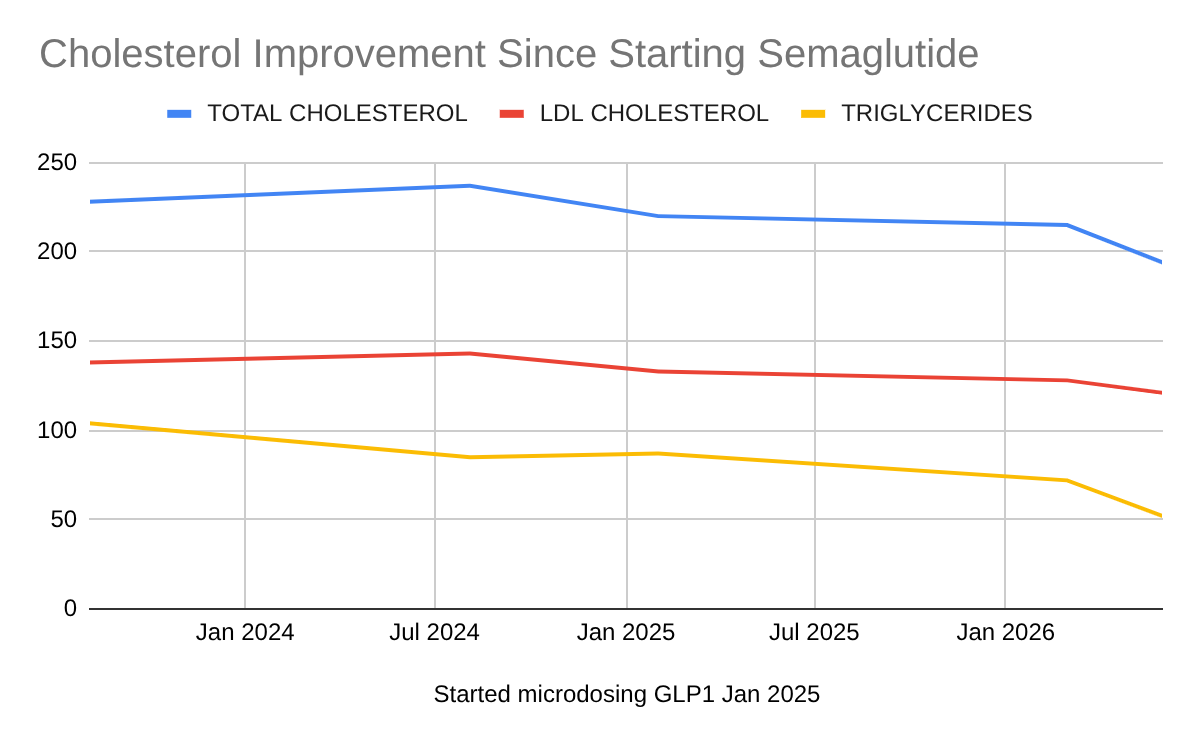
Within weeks, my bloodwork began moving in the right direction.
One of the things I've learned throughout this process is that successful GLP-1 treatment isn't just about taking a medication. It's about having a knowledgeable clinical team that understands how to interpret the data and make thoughtful adjustments along the way.
When I started microdosing semaglutide in January 2025, I began at 0.20mg weekly. My results were positive, but as we continued to monitor my bloodwork, the team at The Aesthetic Concierge identified an opportunity to potentially provide additional metabolic support.
Rather than making a dramatic change, they recommended a small increase to 0.25mg weekly.
That adjustment may sound insignificant, but that's often where experience matters most. At TAC, we don't just look at weight. We review cholesterol, LDL, triglycerides, A1C, body composition, symptoms, recovery, lifestyle, and long-term health goals. The objective isn't simply to prescribe medication—it's to optimize health.
Since increasing my dose, my bloodwork has continued to move in the right direction. My total cholesterol has fallen below 200 for the first time in years, my LDL has continued to improve, and my triglycerides have dropped to 52.
What stands out to me is that these results weren't achieved through aggressive dosing. They were achieved through careful monitoring, data-driven decision making, and individualized care.
In today's healthcare environment, many patients receive medications through large telehealth platforms that focus on volume. My experience has reinforced the value of working with a team that specializes in ongoing clinical management. Sometimes the difference between good results and great results isn't a major intervention—it's having experts who know when a small adjustment can create meaningful long-term impact.
One of the biggest surprises from this journey has been what I've experienced as a runner.
When I started on semaglutide microdose, I wasn't looking to improve my race times. My primary goal was improving my metabolic health and cardiovascular markers.
Over the past year, however, I've noticed something unexpected.
I've lost approximately 5-7 pounds while maintaining my strength in the gym. Most of that weight appears to be inflammation and excess body fat rather than muscle, as my lifting performance has remained strong throughout the process.
The result has been that I simply feel lighter when I run.
Recovery between hard efforts feels better. Long runs don't seem to linger in my legs the way they once did. While it's impossible to attribute that to any one factor, the combination of improved metabolic health, lower inflammation, and a leaner body composition appears to be helping.
Perhaps the most interesting comparison is against my younger self.
Between 2010 and 2015, I ran several 10K races with times ranging from 45:03 to 50:10. At the time, I was in my late 20s and early 30s.
Today, at 44 years old, I'm still running competitively and recently completed a 10K in 46:49. Since then, I've completed one of my strongest training blocks in years and successfully tackled a challenging mountain 10-mile race.
For me, that's the real goal.
I'm not trying to become a faster version of my 25-year-old self. I'm trying to remain healthy, active, and capable as I move into my 50s and beyond. If improving my metabolic health allows me to continue running, lifting, and enjoying the activities I love at a high level, that's a win.
Perhaps the most surprising part is that my race times today aren't dramatically different from the times I was running in 2013.

One unexpected milestone this year was being featured in a national Men's Health article discussing the growing trend of GLP-1 microdosing among healthy and active adults.
The article highlighted my experience using semaglutide to improve blood sugar regulation and cardiovascular markers rather than pursue significant weight loss.
The article explored an important question:
Can low-dose GLP-1 therapy help healthy people optimize their long-term health? While research is still emerging, my own bloodwork has made me optimistic that Yes, GLP1s are for cholesterol and yes, GLP1s are for prediabetes!
My goal has never been weight loss.
My goal has been to be proactive about my health rather than waiting for a problem to develop. With a family history of heart disease and bloodwork that was steadily moving in the wrong direction, I wanted to take action before additional medications became necessary.
Today, my cholesterol is lower, my A1C is normal, my triglycerides are the best they've been in years, and I continue to feel strong both in the gym and on the road.
Most importantly, I feel confident that I'm investing in my long-term health.
A year and a half into this journey, I'm incredibly happy with the results, and even more excited to see where the next few years take me.